
The Climate Engagement Conundrum 4 – Unwrapping solutions
We have seen how the conundrum of climate engagement has unfolded – starting from mass global support but ending with weak climate action when one would reasonably anticipate the opposite. We have seen how this conundrum may be explained by factors deep within the psychological make up of humans. People primed to respond to local and immediate threats and otherwise hoping for the best or at least that things will continue much as they always have in our lifetimes.
We have peered into the dark recesses of fossil fuel industry and how they have so effectively exploited these psychological biases and tendencies, to both downplay climate risks and make out that they are in fact part of the solution.
And now it is time to put the advice from Sun Tzu we looked at in the last article into practice with a better understanding of the conundrum itself, its causes and how these have been exploited. In this way we begin to understand the opposition better and how to counter it more effectively. This is the purpose of this final article in the series to bring our learning to a practical resolution which can help us recover and regroup stronger, less idealistic perhaps, but more grounded in the reality of human nature and values with real insight and opportunity for effective action.
I will consider in particular the one bright star of the renewable energy explosion and see if and how climate action can use this as a base case to map out a new, positive and energised approach to climate engagement. I will look at the lessons that can be meaningfully taken from the review of climate engagement and barriers undertaken so that the brakes can be lifted and it begins to realise its potential and need to become an unstoppable movement; the social tipping point I mentioned in the first article.
But ultimately in my view, the reality and threat of climate change is the true basis for engagement and action. I will look again to see how that reality can be the driver behind a true social tipping point; integrating the moral imperative to act with the opportunity that technology offers us, all the while acknowledging people’s values (including conservatives) and their concerns. Ultimately the strength of climate engagement must lie in its rationality; recognising and sharing the need for urgent climate action free of distortion is the holy grail from which all else flows.
New Directions?
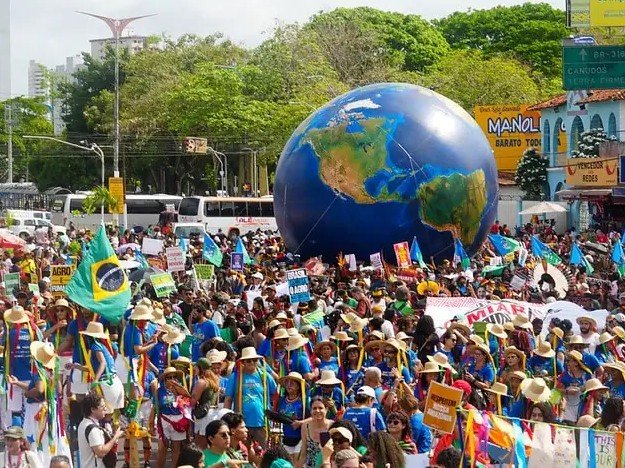
What a reoriented climate movement might look like — one that shifts from demanding government action to building a grassroots movement that makes real change possible directly.
A lot of the major frustration of climate activists has been while engaging with the climate science and its dire implications for society yet seemingly unable to share that in a way which makes any meaningful difference in people’s lives. While the internal and external barriers as we have seen in the previous two articles are significant, these barriers have been well recognised for some time, but effective counter narratives have been slow to develop.
Perhaps what is needed now is a shift in focus from demanding that Government make the appropriate right policy decisions, towards positive commitments in our own lives towards meaningful climate action. This can mean adopting a greener lifestyle certainly (and importantly) but it can also mean that this commitment makes itself heard on matters of climate and natural importance at the local, regional, national and indeed international levels .
The truth is that governments are made up of politicians who will rarely go far out on a limb unless they know that there is a consensus in support of those measures, especially when there are cost implications involved. While research suggests that politicians may underestimate the level of support for climate action, all too often it is because that support is barely audible whilst the opposing side is positively raucous in their arguments based on costs and liberties, erroneous though they may be.
What I am talking about here is a general mobilisation in support of effective climate action both in our personal lives as well as in the public policy arena. That climate activists focus on engaging our neighbours, family and friends, including extended connections through our social media networks. Notably, in a recent study on potential climate engagement in the US, it was this combined narrative supporting personal as well as policy pro-climate action which also gathered the most support compared to an either/or approach.
The climate anxiety experienced by younger people which I looked at in the second article in this series also helps to point a way forward. At its core is a deep sense of disempowerment and lack of agency whilst at the same time fully appreciating the consequences of inaction. They simply do not have the clear avenues for meaningful action. It is like observing from afar a coming tsunami but incapable of stopping it and unable to distract people enough from their day-to-day activities to avoid it. Any effective climate movement must give the power back to people to make meaningful changes that have real impact.
Putting Positive Climate Action Into Practice
The economic revolution in renewables offers a practical model — and points to the specific, local battles where individual voices make a concrete and immediate difference.
What this might mean in practice is suggested in the optimistic analysis by Bill McKibben, the climate action veteran reflecting on the remarkable surge of renewables in the Heated article ‘ Where does the climate movement go from here’
McKibben states whilst it might seem that the climate movement has reached the end of the road with Trump’s anti climate, pro fossils agenda, the oil and gas industry know that they are facing an unprecedented threat in solar. He argues the reason it was so hard to make progress on climate change for decades is because fossil fuels were so cheap and woven into every part of the economy.
But that is longer the case and for the first time renewables are cheaper than fossils giving an incredible economic impetus to carbon free energy. In the most recent reports; renewables supplied 26% of US electricity in 2025. But more remarkably, it is estimated that to 2030 and in the face of determined Trump opposition, renewables will provide almost all new electricity capacity in the US.
On the issue of intermittency (‘what do you when the sun isn’t shining and there is no wind’) large grid scale batteries costs to store energy have plummeted and in places such as California (the fourth largest economy in the world) and Australia, they are already providing the balancing power to the grid in place of gas and coal which are moving down the pecking order of generating call-up.
Indeed where permitted, such as in Australia and spectacularly in Pakistan; the simple dynamic of cheap, accessible renewable power installed directly in the home or business premises is having a snowball effect moment. But in the United States, the UK and in Europe, the deployment of renewables is being hindered by restrictive permits, planning and local opposition both in terms of solar installations and the grid transformation needed to deliver that distributed power supply to cities and towns where it is needed. The combined impact is slowing the transition and protecting entrenched fossil providers in their traditional position of power (literally!).
Speaking Up
This is where Mc Kibben envisages the new role for climate advocacy – from personally adopting solar panels on your rooftop (if you own one) or your balcony as happening widely in Europe (if you are allowed to) – all forms of intentional personal actions. Seeking out renewable energy and renewable smart tariffs; joining petitions and groups to demand the permitting of solar panels on balconies, backing local authorities when siting EV charging bays in towns and cities, asking your local authority to allow appropriate cross pavement charging leads and turning up at public consultations to support solar and wind projects in the local area. This is all the nitty gritty micro detail of how battles are fought and won; leading cumulatively to the transformation as more and more people create that unstoppable force which is the essence of what a social tipping point is.
But significant opposition remains – people object to the change of land use from agriculture to solar farms, people object to the siting of wind turbines impacting on their visual amenity of the countryside. We have seen how some of the biggest battles are fought over the electricity transmission grid renewal which is essential to bring renewable energy from more remote and off-shore locations to cities and locations of demand. Opposition has often delayed or indeed terminated such projects. Again engagement with the issues to reconcile differing values and priorities is essential but not simply a roll-over and accept attitude either.
There may indeed be a silent majority that supports local solar or wind farms but that is no good if they are silent. It is here in the specifics of deployment that open, direct, vocal and confident voice for renewables can have a real and specific benefit as much as any government policy in the distant halls of power.
And it is rarely a black and white binary alternative that some groups with ulterior motives would have you believe as we encountered in the last article. Yes renewable power installations take up agricultural land but farming can and is successfully carried out underneath and between the panels- ‘agrivoltaics’ which a recent report indicate can actually improve crop and water efficiency compared to standard farming practices.
But part of this grassroots movement must be an acknowledgement of the kernel of truth that often underlies opposition. Yes we need more highly visual pylons to transmit renewables but it needs local activists willing to make the argument that the wind turbines and pylons are a cost worthwhile to transform our systems to clean renewable sources instead of polluting fossil. So what if our carbon emissions globally are so much smaller than others? We all need to reach zero emissions and as soon as possible and let it be said, the fastest in the developed world.
In other words the climate argument is never far and cannot be buried under the economic argument for renewables no matter how compelling that argument has become. Cost reduction and co-benefits are great but the underlying reasons for the adoption of renewables and with it the system wide electrification of our power systems must be directly and explicitly front and centre connected to the prevention of catastrophic climate harm.
Because now we need to go so much further and faster to stop carbon emissions in its tracks. This needs wholesale transformation but what is really needed is the people to stand up and demand this, not because it is cheaper but because it is the only way we can continue to power our planet and keep it habitable. The decision makers whether at the local level deciding on a solar farm or politicians making policy in our parliaments need to hear this call loud and clear because ultimately it is only people that make the difference.
Lessons Learnt – Perspectives, Values and Priorities revisited –
But a broad based strategy only works if it can reach everyone — including those whose values have been deliberately turned against climate action. This section considers how the movement breaks out of its silos.
But in making this argument, we need to break from the silos that have been built up and reach out to people.
The sting of ‘elitism’ charged against climate activists will need to be faced with humility and determination to include the unemployed person in a declining post industrial city as much as the liberal professional, city dweller– positive examples exist. Once alert, the rebalancing can start.
The man who identifies meat eating with a macho identity of himself or the young tradesmen and women in post industrial communities can also be directly engaged and reframe to be a leader of change – optimistic, perhaps, but it involves a difficult but essential move from them and us to a mentality of us all, wherever we are, being part of the solution.
The Truth will set you free!
A bigger challenge exists when dealing with Uncle Pete who we first met in the second article in this series but whose values of independence and prosperity have effectively been framed to conflict with effective climate action. We have seen how the fossil fuel industry relentlessly connected climate action with Government interference and additional cost burden on ordinary household. That was a distortion then but even more so now as renewable costs tumble and one of the main obstacles is ironically regulations, so hated by Uncle Pete, that restrict and limit their rapid deployment!
But ultimately the real reason and the true way to win the argument is to turn it on its head by bring front and centre the science based rationality that is summed up in need to phase out the burning of fossil fuels fast.
Once the connection between the extremes of weather, the impacts on livelihoods – drought, flooding, and food prices is recognised; then adopting effective climate policies and action on renewable energy, electric vehicles, heat pumps and lifestyle adjustments must follow. It also becomes an important way, ironically, in which Uncle Pete may demonstrate his patriotic commitment to his country, his support for national security and even remain truly independent through his own home power generation!
The commitment to meaningful climate action also brings significant, tangible co benefits from cheaper and locally produced renewable energy improving energy security in these extremely volatile times as the Iran war has amply demonstrated to a whole horizon of new green jobs (driving the enormous Chinese transition for example), reducing local air pollution from low emission zones (as in London), developing technological solutions (again China being the prime example). All good reasons in themselves to support climate action, but something is still lacking.
We have the transition means through renewable energy, battering away at the economic argument for fossils. We also have the basis for a new climate movement, focused on specific policies and the local plans connecting to the renewable energy and transportation revolution which are in real need of vocal local support in communities. These connections can at the same time align a whole range of values as well as people’s priorities through the powerful range of co benefits offered. Altogether they can really coalesce into something powerful and truly grass roots.
But what is missing is the real statement and reasons from climate science why all this is not simply cheaper, positive or generally beneficial, but is in fact essential and demonstrates, without exaggeration, why the transformation required is existential. The economic and co-benefit case, compelling as it now is, cannot stand alone.
The National Emergency
None of the above is sufficient without the honest statement of what the science tells us — because it is that clarity, not reassurance, which transforms awareness into agency and agency into power.
And this is why campaigns such as the National Emergency Briefing campaign in the UK matters so much. It is because they demand that all of us; citizens, media, institutions and government acknowledge the situation for what it is: a civilisational emergency unfolding in real time, one that already kills people, destroys livelihoods and is accelerating. Not a problem to be managed, sheepishly dressing it up as something else or a technocratic sleight of hand , but a crisis that should be directly reshaping every priority we have.
Uncle Pete, who values straight talking and doesn’t like being taken for a fool, deserves to be told the truth — that the stakes are existential, that the costs of inaction dwarf the costs of action, and that what is being asked of him is not submission to an elite agenda but participation in the most consequential collective endeavour of our lifetimes. It is where real patriotism and independence begins because it is grounded in both reality and agency. The psychological barriers inherent in our normalcy and optimism bias effectively fall away because we have a full understanding of the crisis facing us and the need to mobilise urgently and at every level of society.
But critically for the resolution, we have a way to release these biases and for the same reason that the climate worried youth can also have an effective pathway to alleviate their anxieties. Not through fearful avoidance of the problem but through a practical commitment in the here and now, in the personal and local to intentional action that really can make a difference. Because we understand both the scale and urgency of the climate problem as well as the ways and means that exist to respond to it .
A pivotal article in the Nature journal in 2025 connected climate action and moral appeal and found that;
‘people, including those leaning more to the political right, respond to moral arguments for climate action that are built on moral foundations around care (avoiding harm) and fairness by embracing some lifestyle changes and becoming active climate citizens.’
For me this demonstrates the potential of willingness across the spectrum from conservative to progressive, with the scientific call to action as represented by the National Emergency Briefing providing the spark.
But even then there is a fight and a need for vocal climate activism. Because despite having ranged a panel of the most eminent scientists in their fields on climate extremes, food security, power and transformation; despite having dozens of MPs in attendance with the intention of engaging with the most current climate science, none of it was broadcast live on national television or picked up as headline news in the newspapers or their online outlets! Demonstrating that the concerted forces for climate denial, delay and most corrosive of all sheer indifference still are a power to be reckoned with and battled against. No one said it would be easy or else we would surely have done it years ago! But now at least the field has been chosen and our forces can at last assemble.
Resolving the Conundrum
So ever the need for climate engagement, fighting to make the truth of climate change present, immediate and relevant in our lives. But now fight that has a new focus, vigour, clarity and urgency based on reality, honestly faced; the most powerful force we have. Following Sun Tzu, we have learnt our lessons the hard way maybe from so many ploys and setbacks from the wealthy and well connected fossil fuel industry but we are ready and see things more clearly now.
This then is the real answer to the climate engagement conundrum of support without action. Not the detail of psychological resistance, nor futile thrashing against the conspiracies of denial, distraction and delay. But a social momentum that re-sets our understandings and priorities and is powerful enough to encompass the full spectrum of values; because it relates to all our common home and mutual survival.
The answer to the climate engagement conundrum is not found in better statistics or sharper messaging, it lies in something more fundamental: the moment a person understands the crisis clearly enough to feel not paralysed but galvanised and empowered— when awareness becomes agency with clear pathways for action.
That shift needs to happen at a kitchen table, in a planning meeting, in a conversation with a sceptical uncle, or in a community rallying behind a local solar project. Each of those moments is an act of power. Multiplied across communities, across values, across the political spectrum, they become the social tipping point that no vested interest can withstand.
Ultimately the conundrum is resolved not from the top down, but from the ground up — by people who understand what is at stake and choose to act on that understanding, whatever their personal circumstances and wherever they are.
Final Note – we are building a database of Climate Groups across the wide range of action and opportunity. Please have a look when it is completed – better yet, help us to build it! The structure is there but there are hundreds and indeed thousands of organisations that can be listed. If this is not for you there are several other roles at Climate Junction – Which Direction where your involvement could really make a difference, whether it is writing a guest post or helping with our social media to build our presence or visibility. We are in it for the long haul but will really welcome some company along the way. Please get in touch via the comments or in the Feedback link on the About page. Thank you too for reading this and the article, it is appreciated.